
Let the People Library
Government can only be for the people when it is of the people and by the people.

It would be fair to say I was somewhat obsessed with the life and legacy of Abraham Lincoln when I was a child. Each April other kids dotted the parameters of Rand Park in Keokuk, Iowa, to observe the reenacted melee between navy and gray, or lined up for homemade sarsaparilla, or made wooden whistles in the whittle tent.
My activity of choice was stalking the middle aged history teacher hired to impersonate President Lincoln for the annual Civil War Reenactment. He really looked like Lincoln too! The best part of all was how he would recite the full Gettysburg Address upon request (or in my youthful enthusiasm upon demand). He would acquiesce every single time.
Eventually, each spring became a Where’s Waldo (or Where’s Lincoln) situation between us. I would ask for the Gettysburg Address. He would recite it. I would ask again. He would graciously orate again. Then he would ironically hide behind the smoke from fake cannon fire to find a quick breather away from me. I would literally crawl between vendor booths ranging from clothiers to jerky makers in the hope of surreptitiously sneaking a peek and seeking my third Gettysburg Address of the day.
So beyond the reflective embarrassment of my brash behavior, the words have really stayed with me.
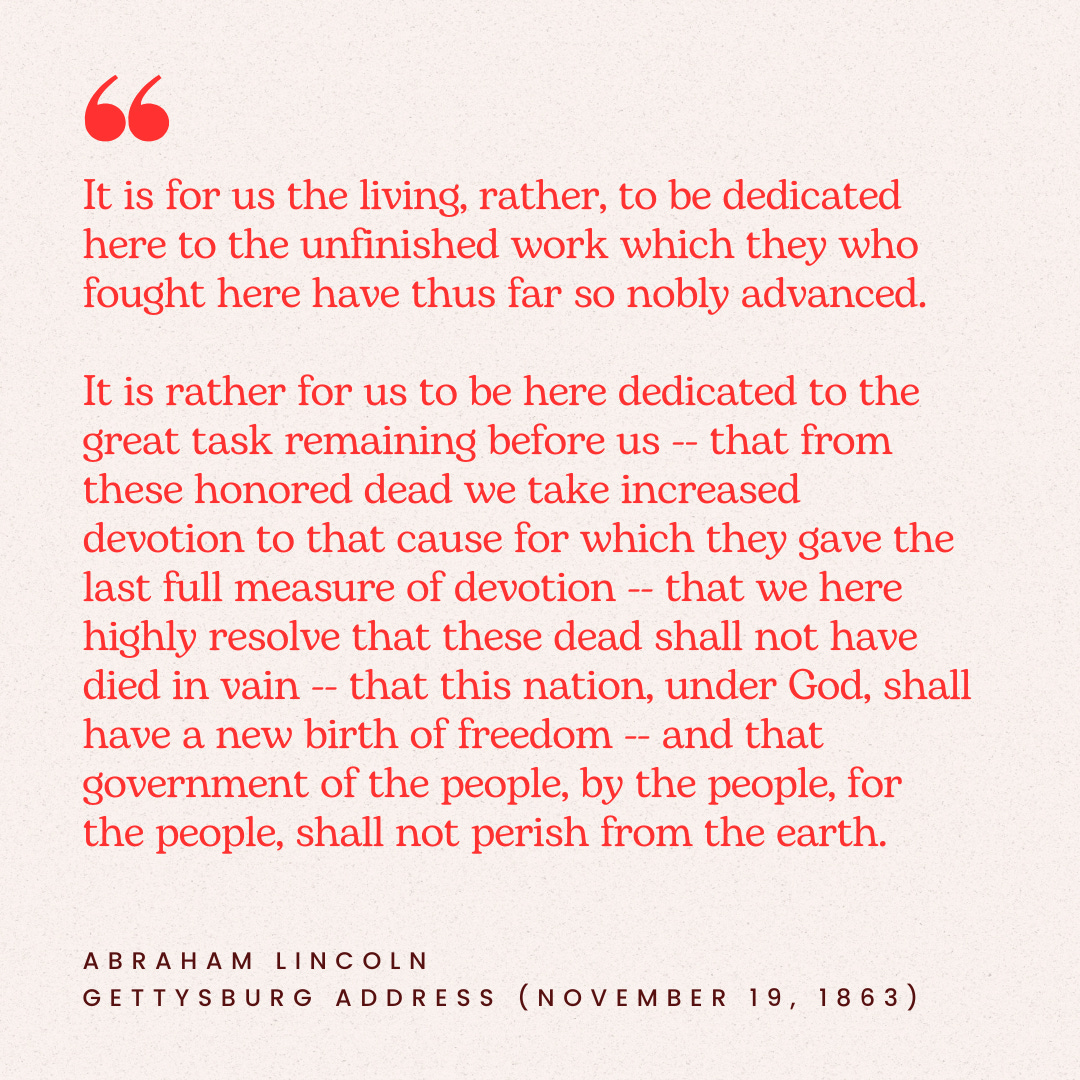
The notion that amid a raging civil war the leader of the nation claimed the hope of reconciliation, the need to reestablish trust, and the responsibility to govern together is profound. At a time of tremendous pain, loss, and turmoil we were called to remember our shared strengths, identities, and obligations to each other.
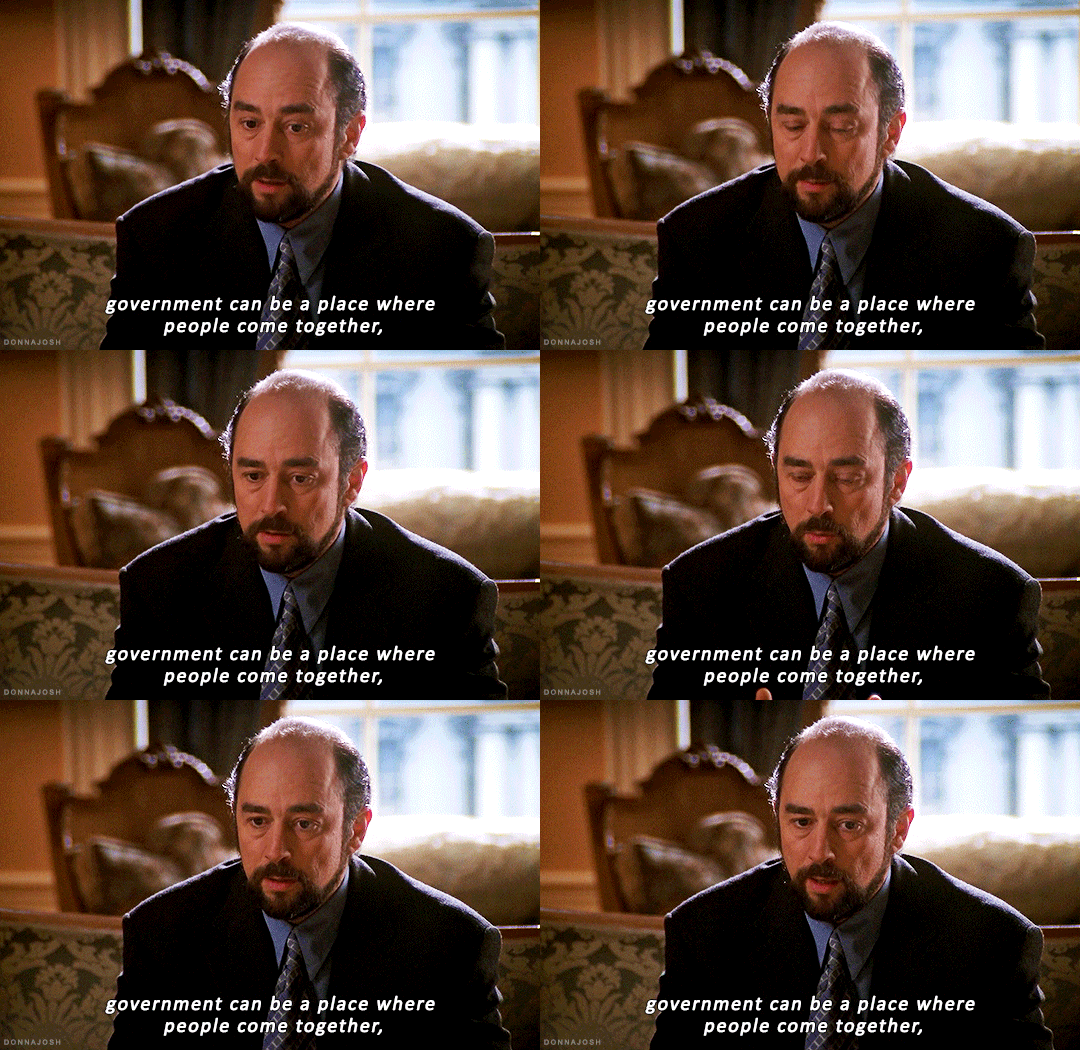
Some days, I wanted to be a speech writer like Toby Ziegler on The West Wing. Other days, I fantasized about the lives of firefighters, park rangers, mail carriers, teachers, or legal aid attorneys. These childhood dreams were founded in the value of contributing to public good. I wanted to sustain and further a form of society that was of the people, by the people, and for the people.
Eventually, I became a library worker. Through that experience, I’ve learned how committees, boards, and commissions provide opportunities for the public to engage in civic processes, increase transparency and oversight, and offer broader representation of the communities being served. As a board member and fiscal officer for the Iowa Library Association and the American Library Association, I recognize the necessary focus, knowledge, and time that is applied to a greater good. This work is complex, consuming, and necessary for the future of free people reading freely.
Facilitating the bureaucratic roles of the Iowa Governor’s Commission of Libraries chair, I acted as a conduit between state processes (strategic planning, reporting, requests for proposals, etc.) and the voice of Iowans in need of information access and literacy services.
Iowa has more public libraries per capita than any other state in the nation and every day volunteer Iowans (who are politically appointed to serve) contribute tremendous value to our communities through library services and stewardship.
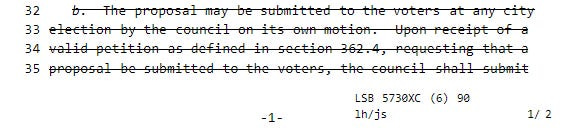
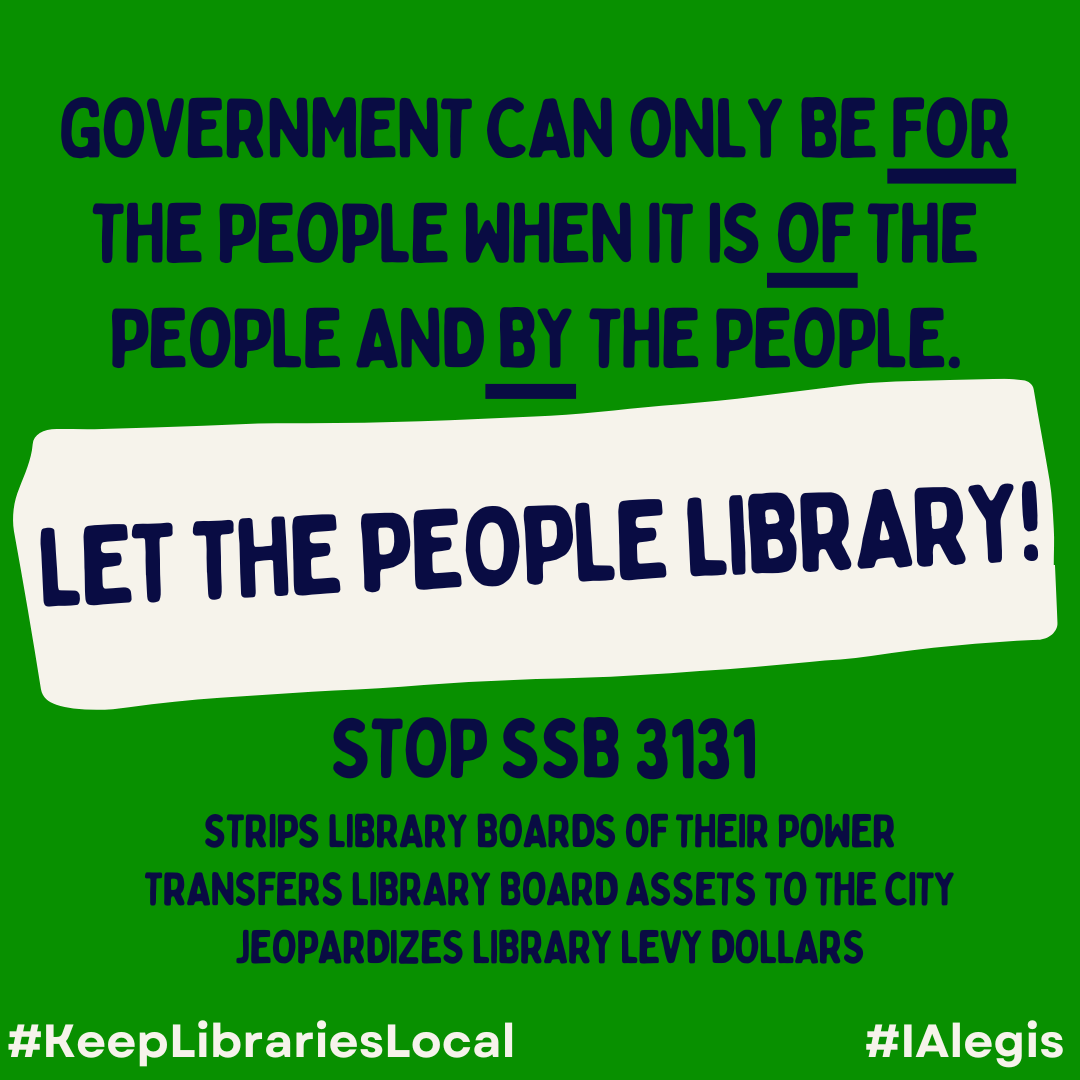
These observable principles make SSB 3131 a verifiable problem. The people are being removed from the library process. This Senate Study Bill seeks to strip the authority of public library boards and to transfer their assets to the city. It does not provide any additional resources to those cities or their staff nor does it reinstate the library levies taken from 97 Iowa communities during the 2023 Iowa Legislative Session.
As Iowa faced the second most library adverse bills in the nation in 2023, I wrote op-eds all around the state detailing the importance and power of trust. Like Lincoln, my honor compelled me to pull up extra seats to the table to do the important (but often messy) work of governance (public service) together — especially with those who do not agree with me and may not value the work of public information access.
As the 2023 Reorganization Bill moved to dismantle Iowa’s state boards and commissions, I implored, “Iowa libraries are special, folks. I credit that fact to the investment into bipartisan, citizen leadership which will vanish if the reorganization bill passes as proposed. I urge my fellow constituents to contact your representatives to remind them that Iowa libraries are your libraries, your business, reflections of your individual communities, and that you are the strongest voices to say how they are organized.”
The Iowa Governor’s Commission of Libraries seats remain open a year later despite multiple applications being submitted. Now, the threat to our public library boards is shadowing the state. The State of Iowa Library has not been stronger or more transparent for the loss and neither will our hometown libraries.
The world must note what was said on that battleground over 160 years ago. We must too remember what was done there to consecrate that ground. Government can only be for the people if it is also of the people and by the people. We must let the people library. We must remember (and answer) the calls to build, to restore, and to governance together.